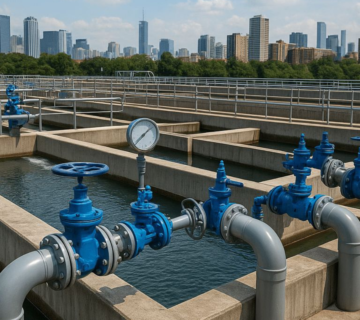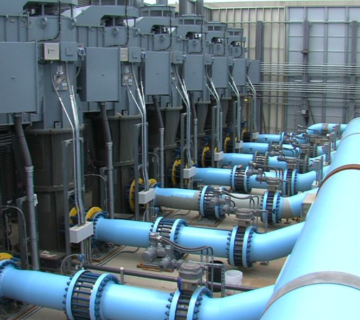

Water and wastewater treatment plants are among the most complex infrastructure assets, requiring close integration between infrastructure systems and multiple engineering disciplines. Successful treatment plants depend on coordinated planning, technical clarity, and effective multidisciplinary integration.
Integrated infrastructure design is essential for achieving reliable, efficient, and sustainable water and wastewater treatment plants.
Infrastructure systems such as intake networks, transmission pipelines, pumping systems, and discharge networks form the backbone of treatment plants. Poor integration between infrastructure and treatment processes often leads to design conflicts, constructability issues, and long-term operational challenges.
An integrated design approach ensures alignment between civil infrastructure, structural systems, mechanical and electrical equipment, architectural layouts, and operational requirements. This coordination reduces technical risks and improves overall system performance.
Building Information Modeling (BIM) supports this integration by enabling visualization, clash detection, and interface management, particularly in complex treatment plants.
Integrated infrastructure design is essential for achieving reliable, efficient, and sustainable water and wastewater treatment plants.